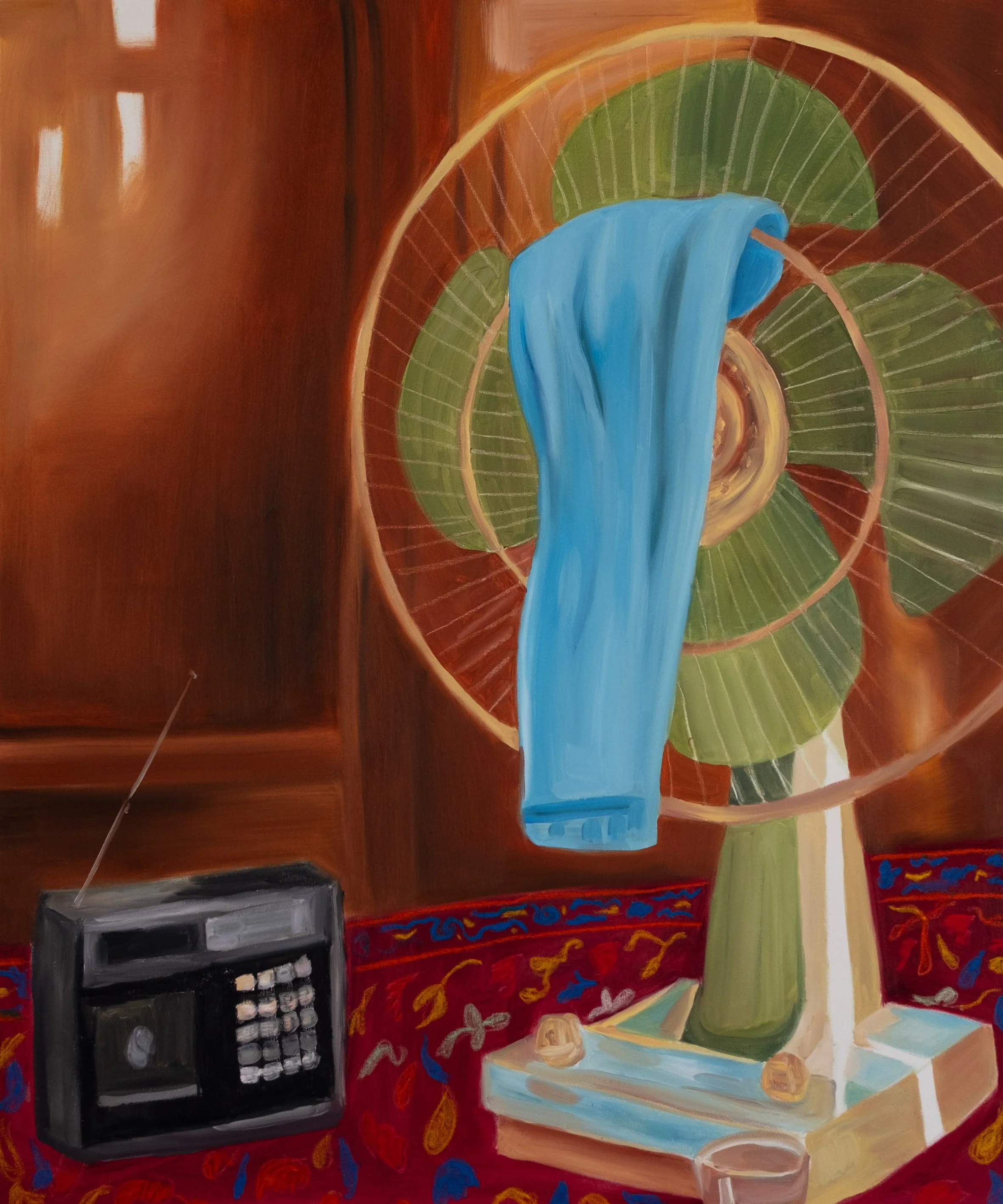
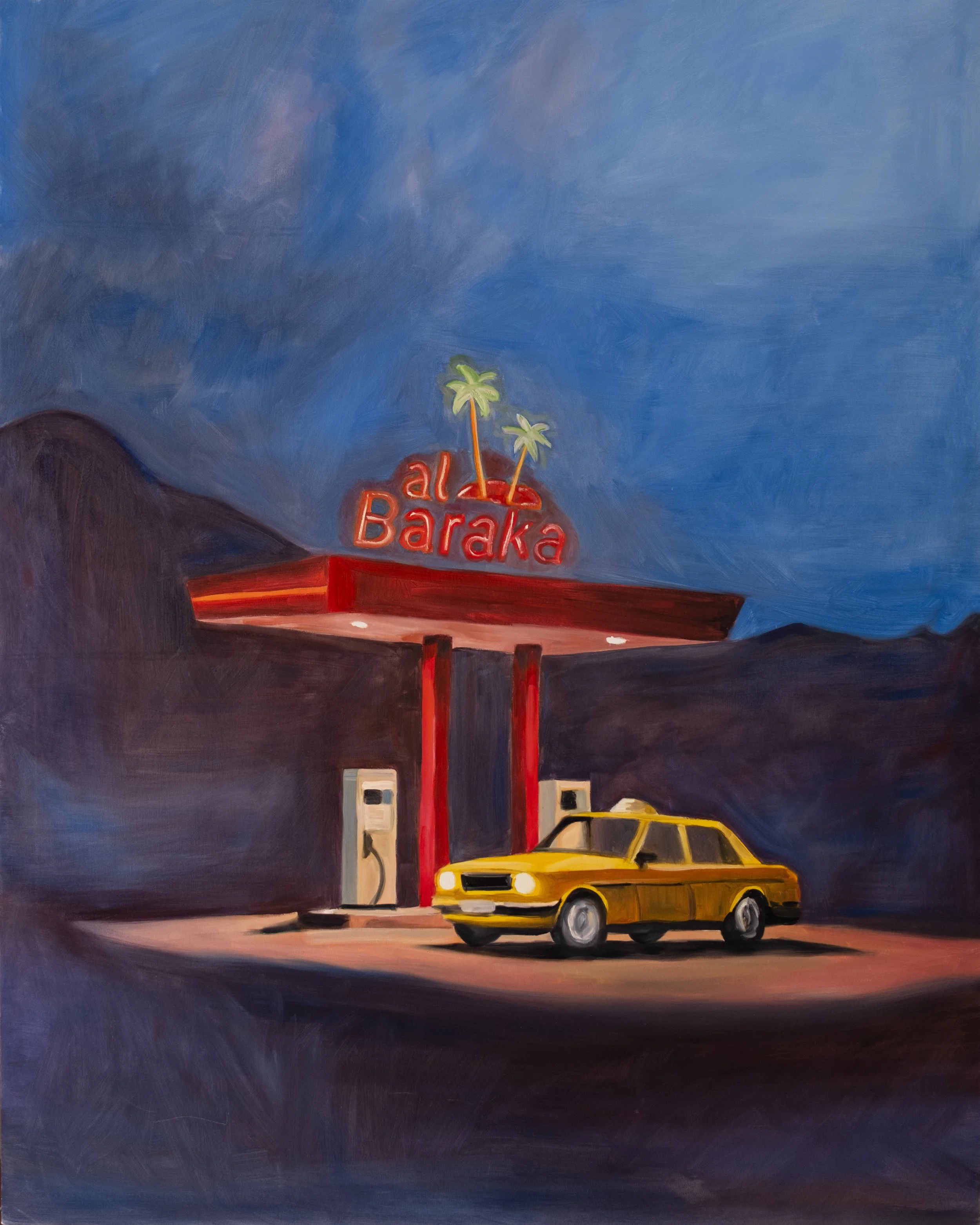
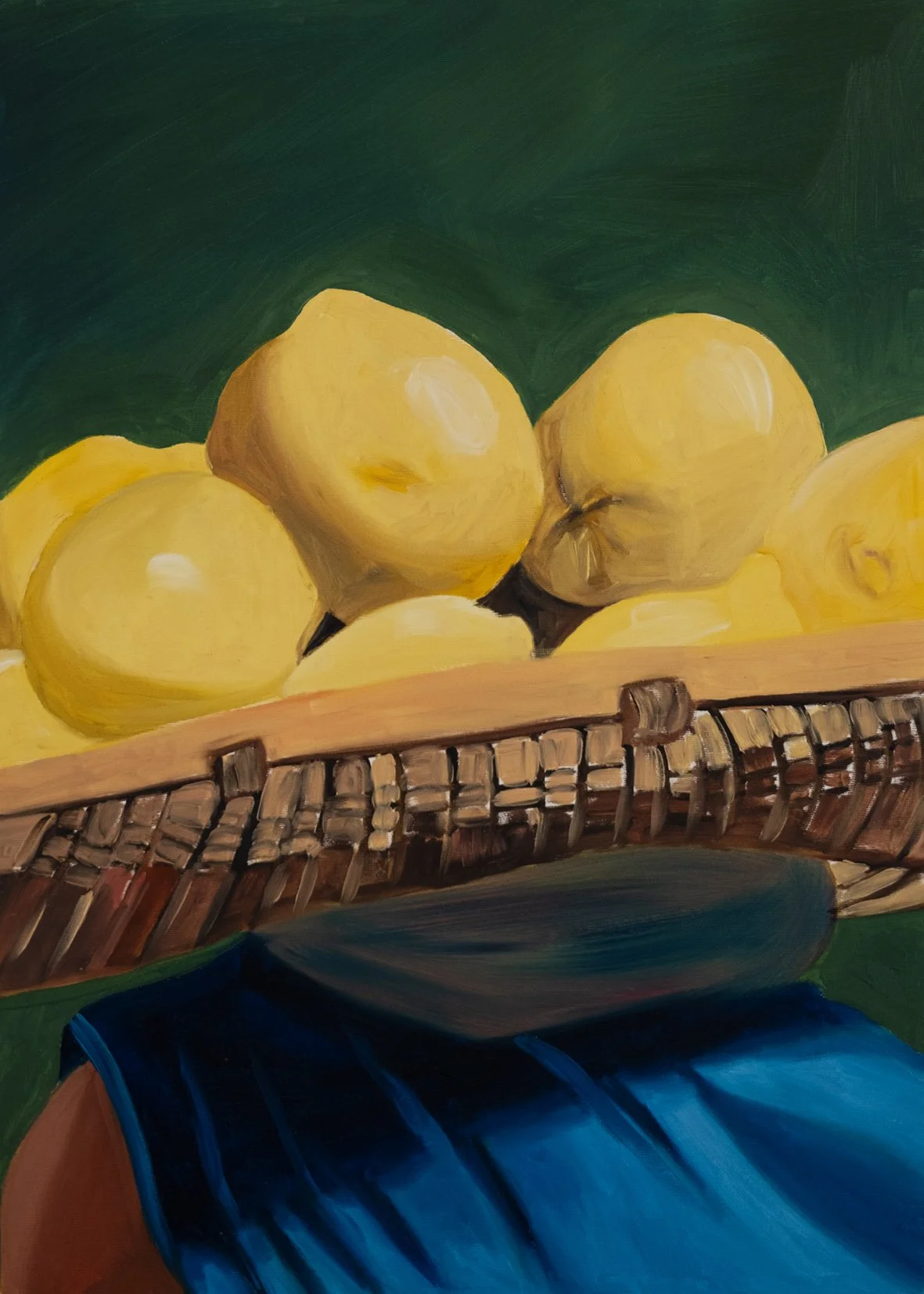
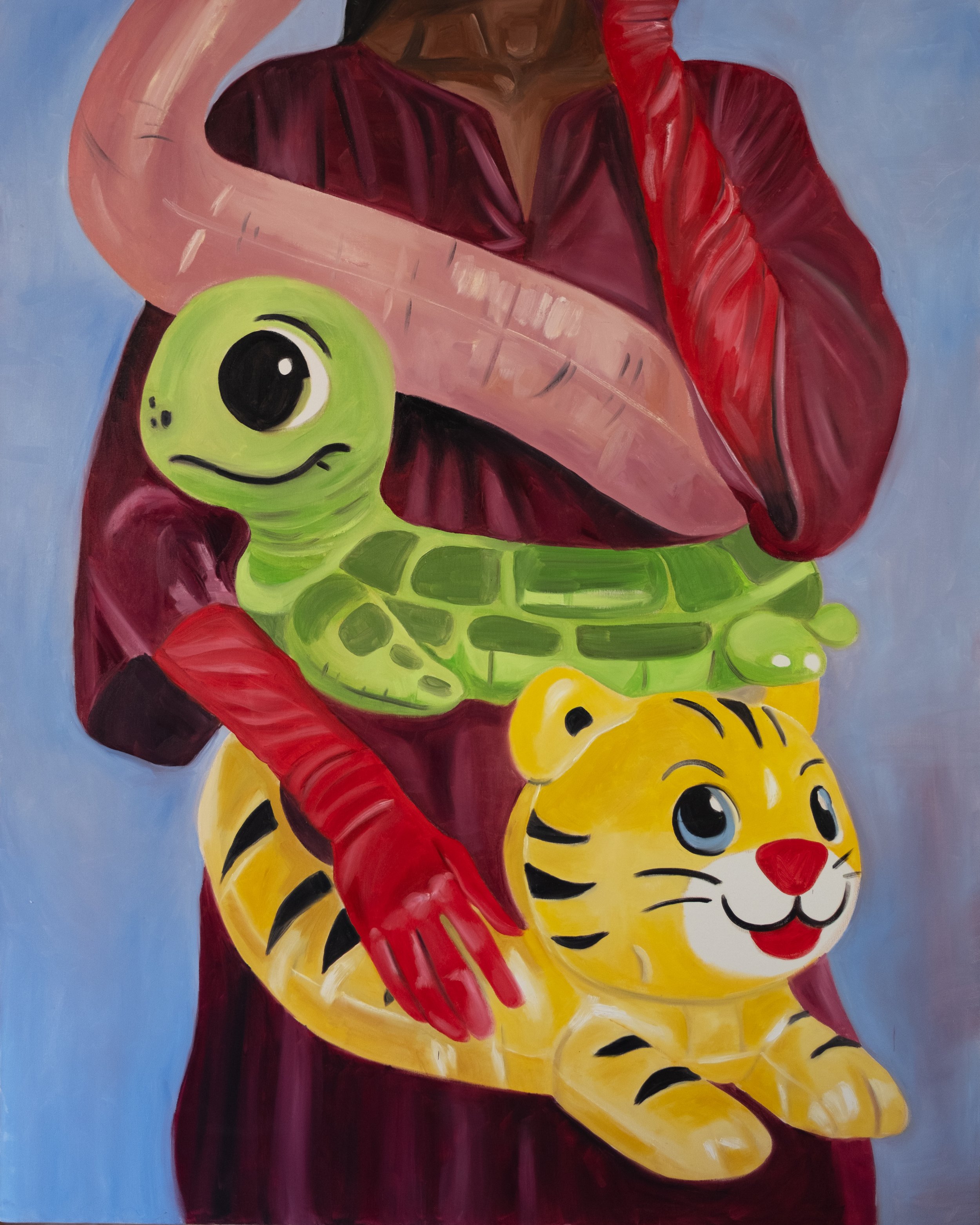
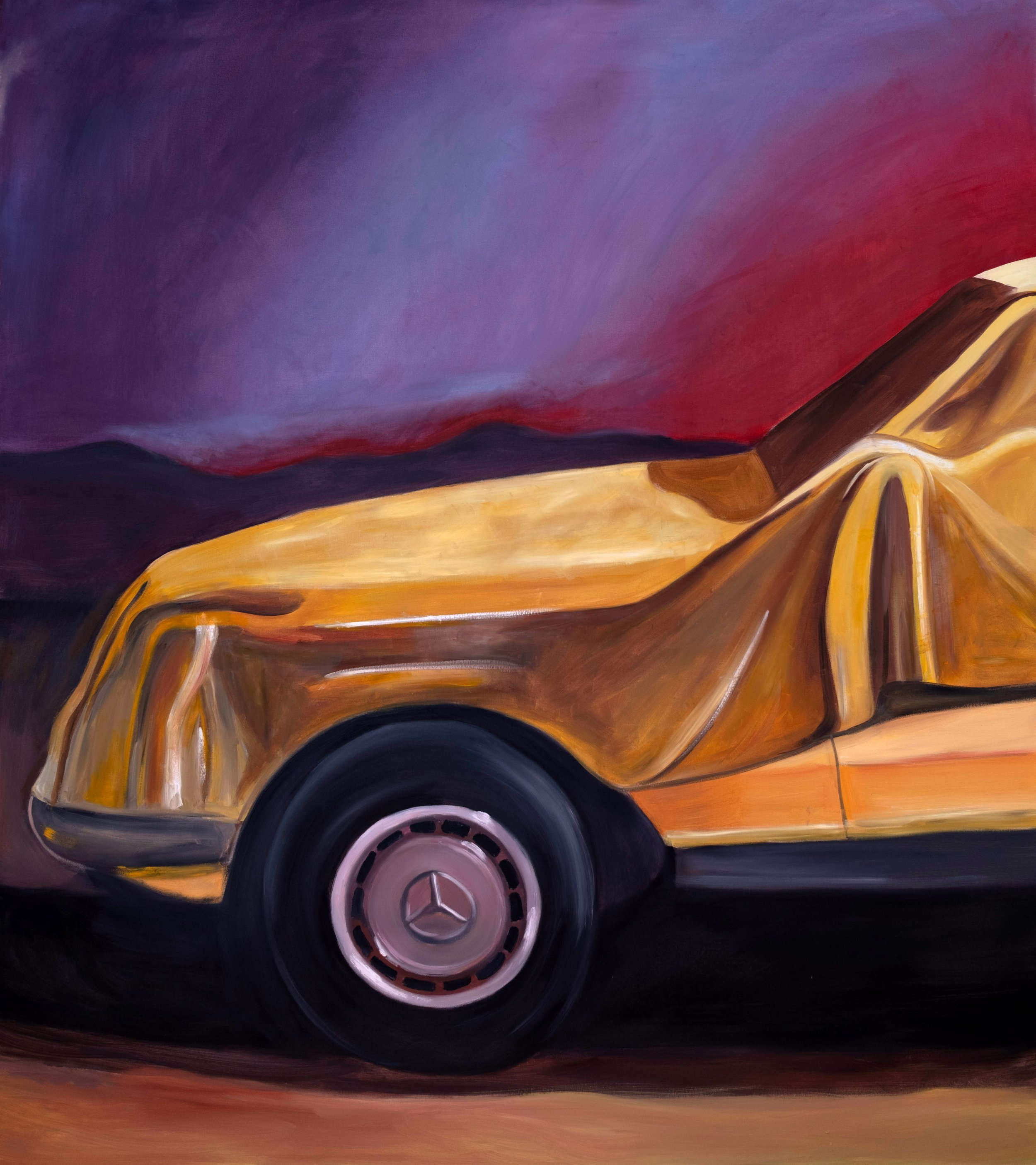
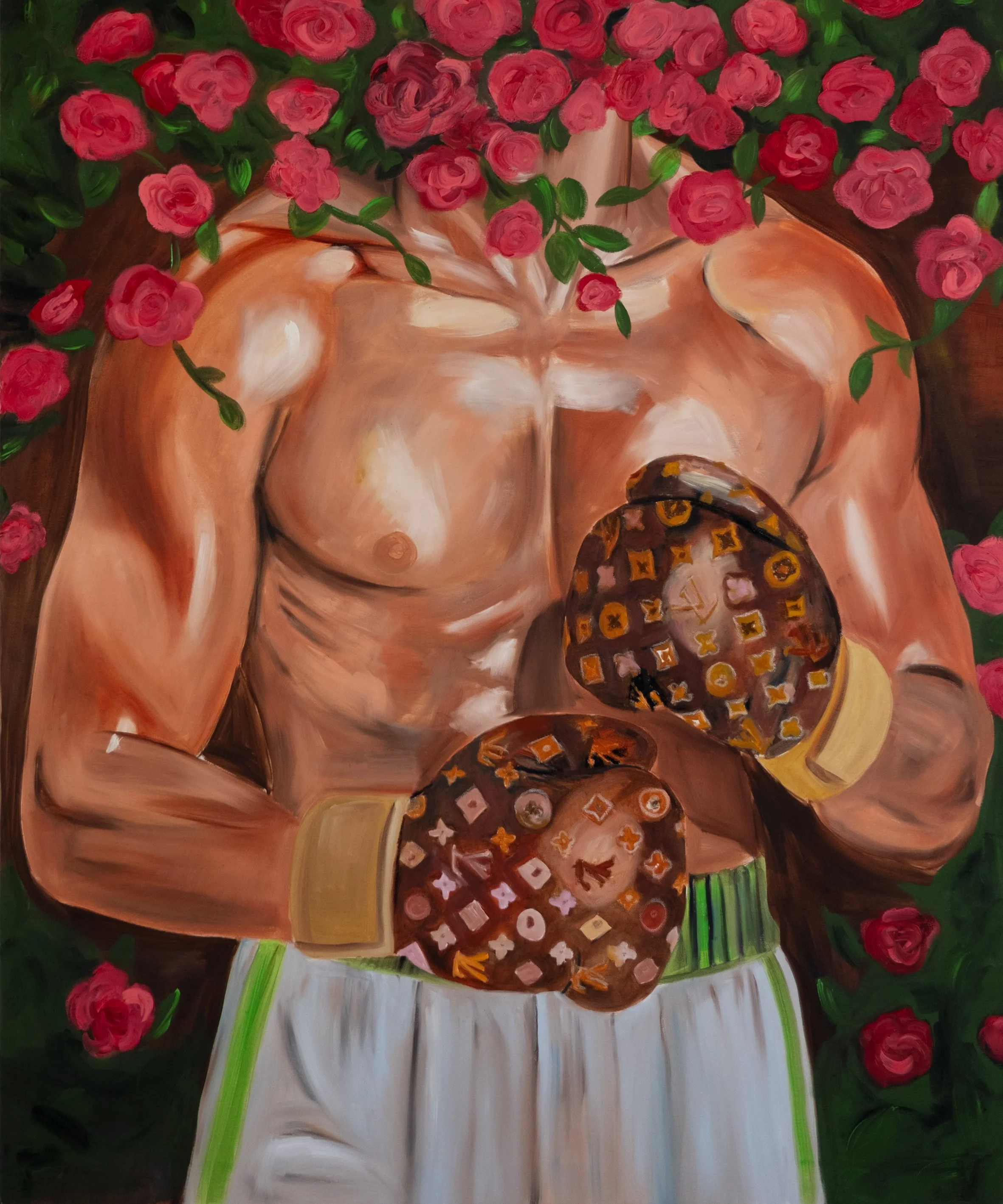
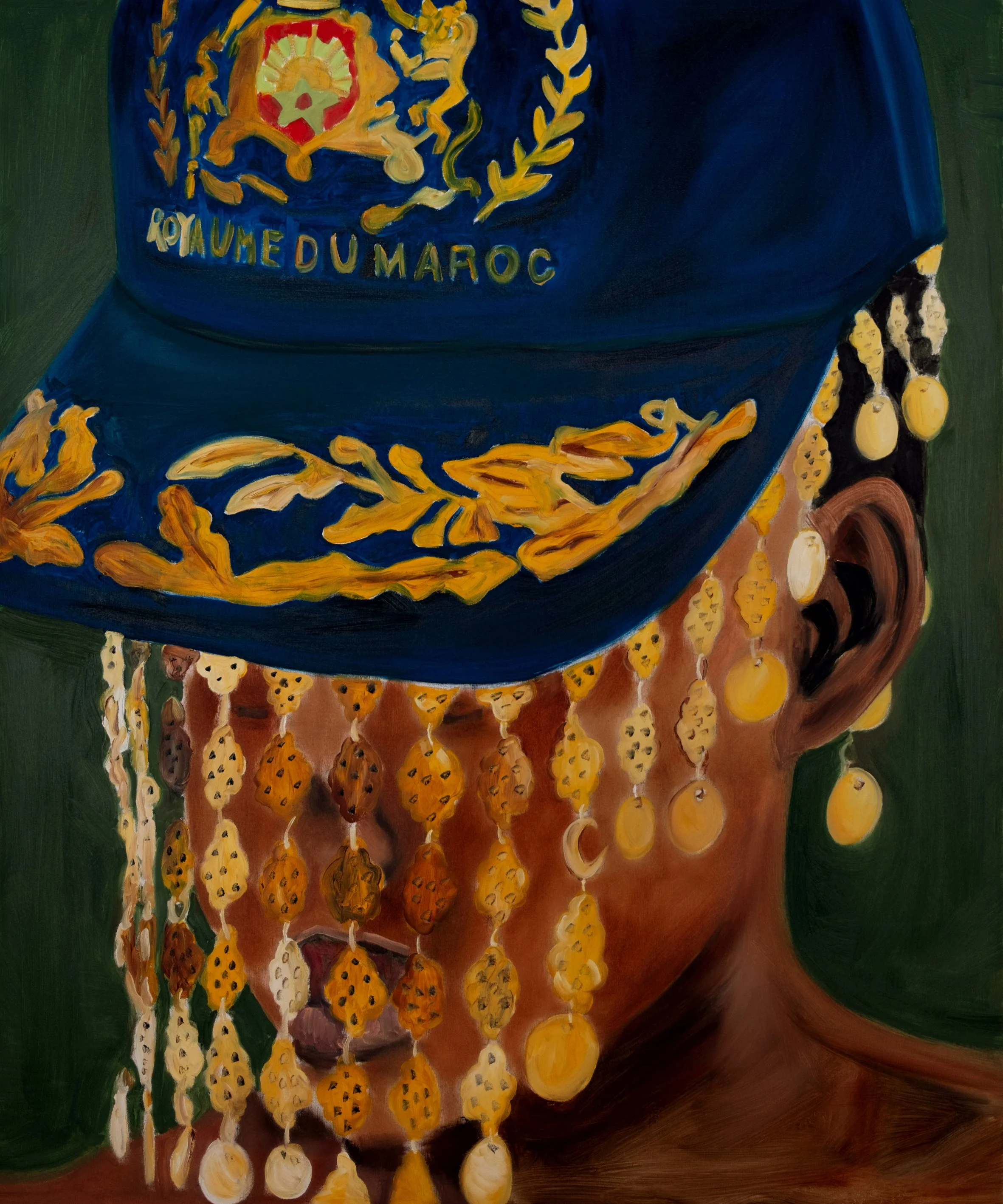
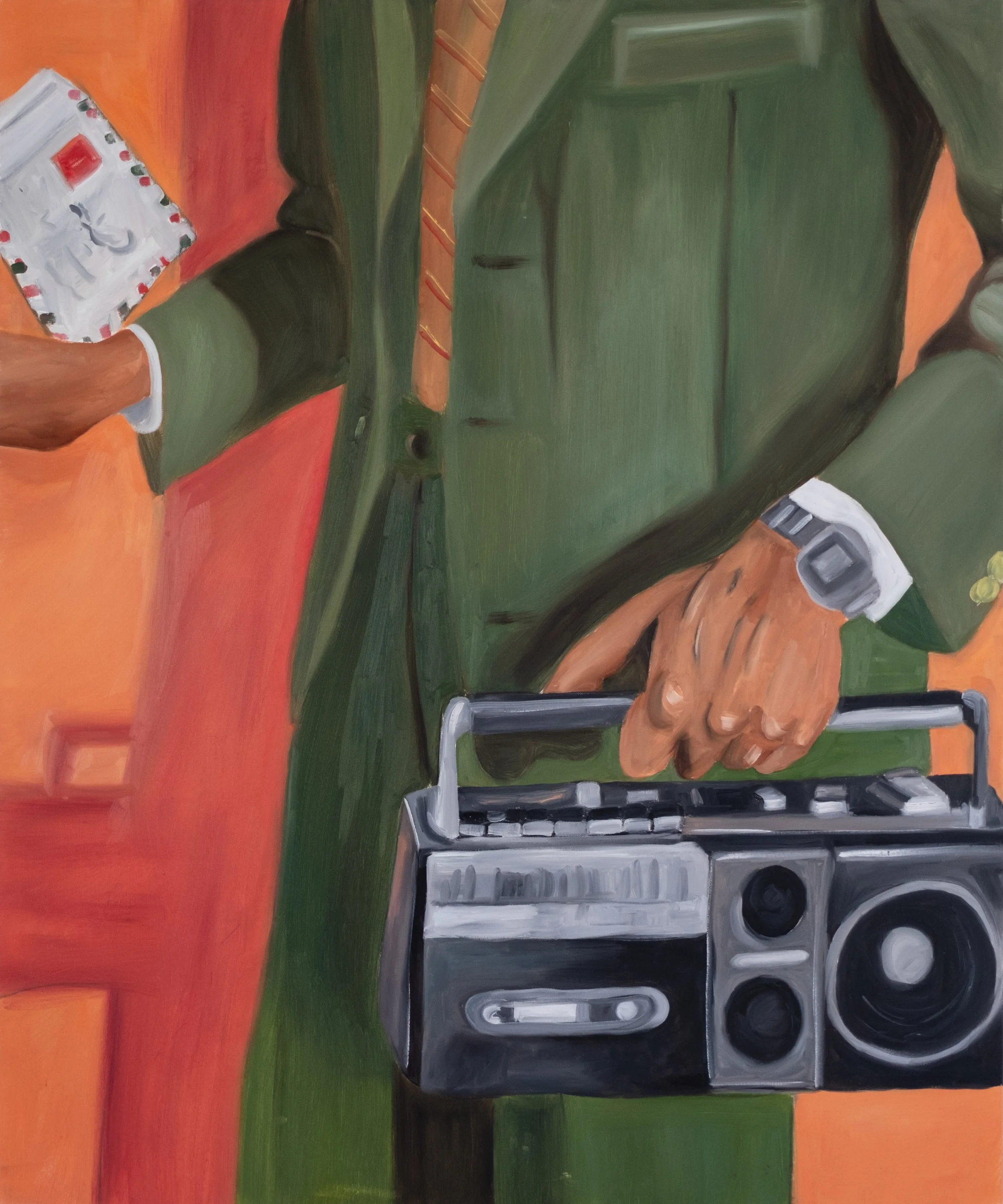
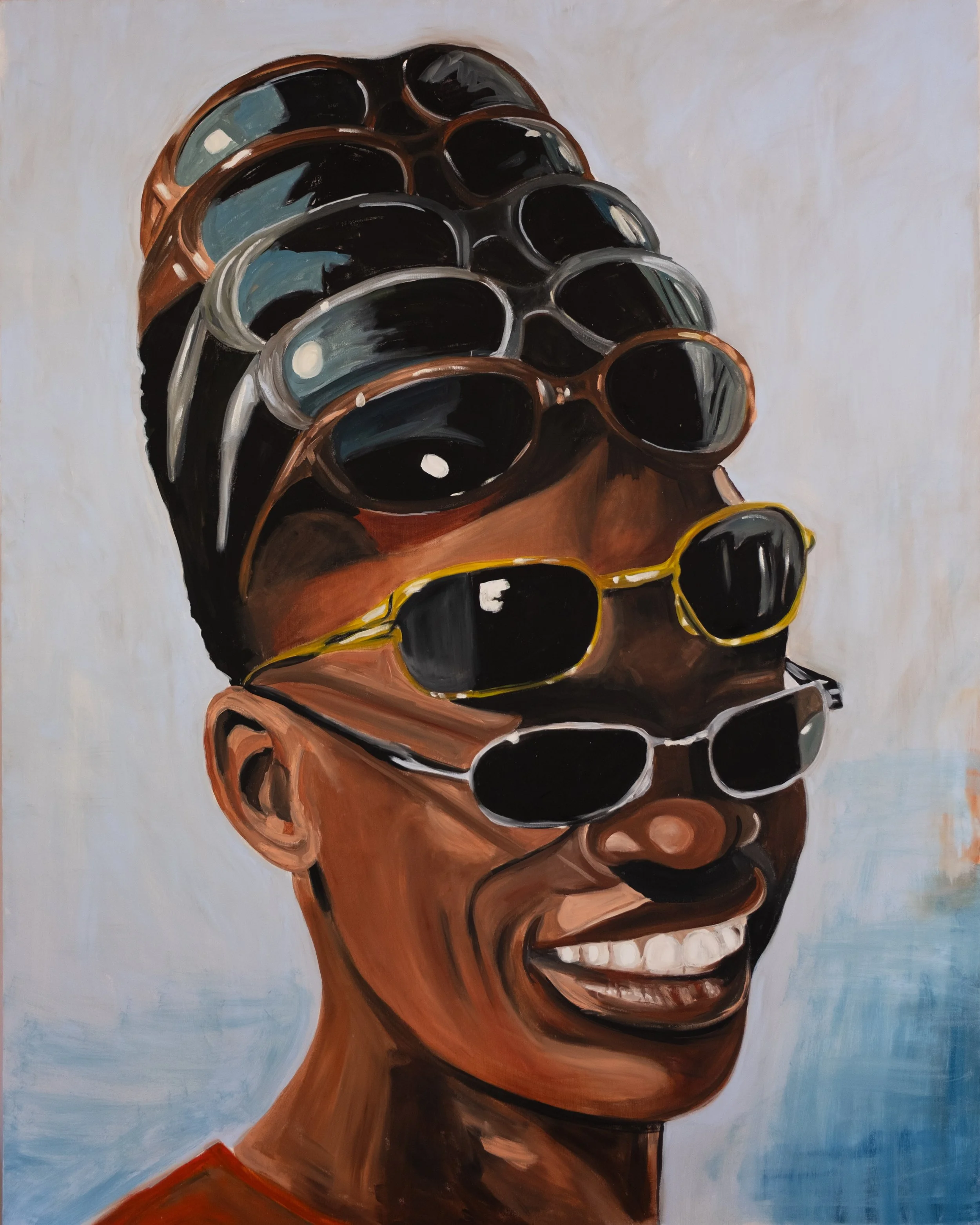
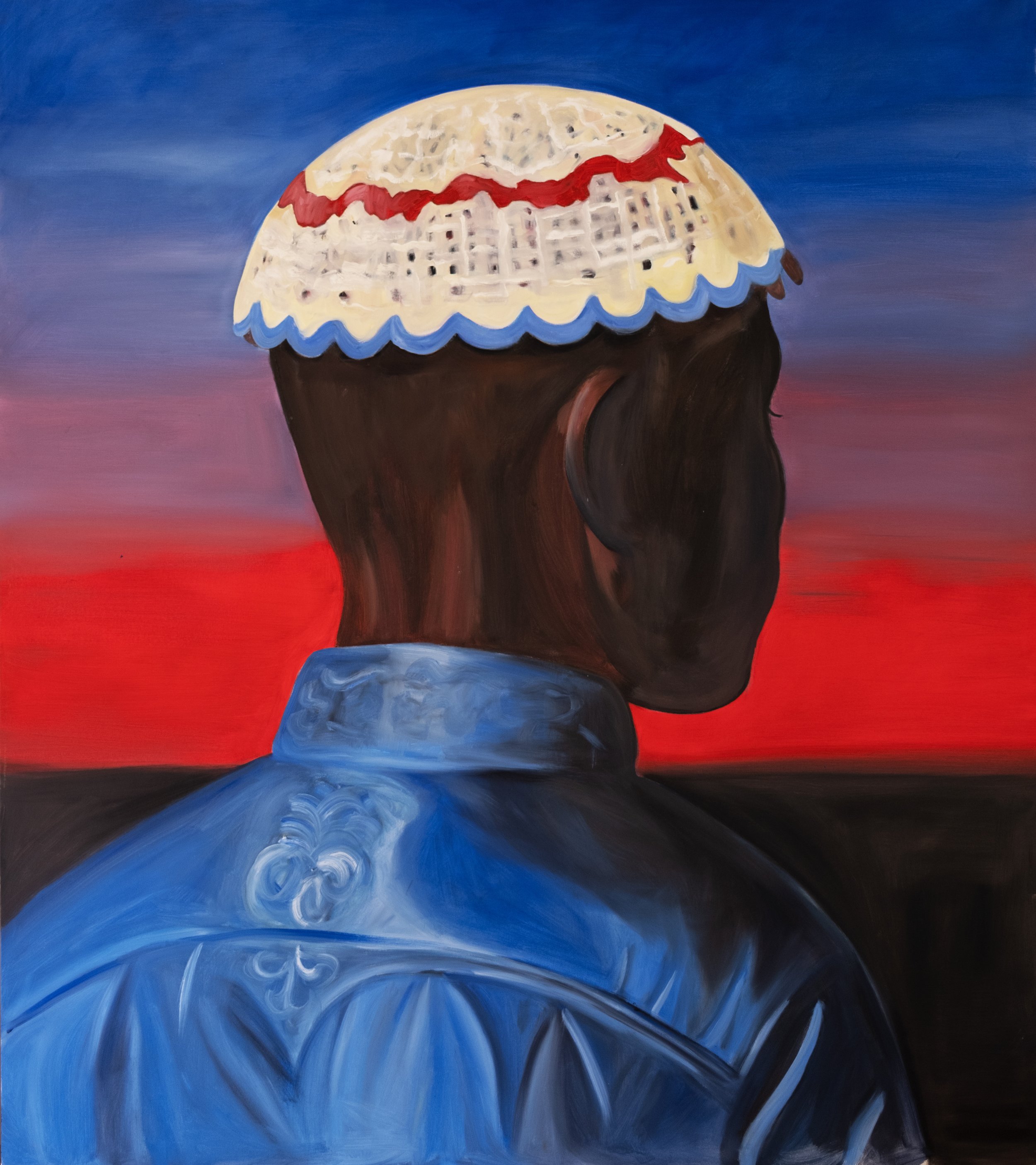
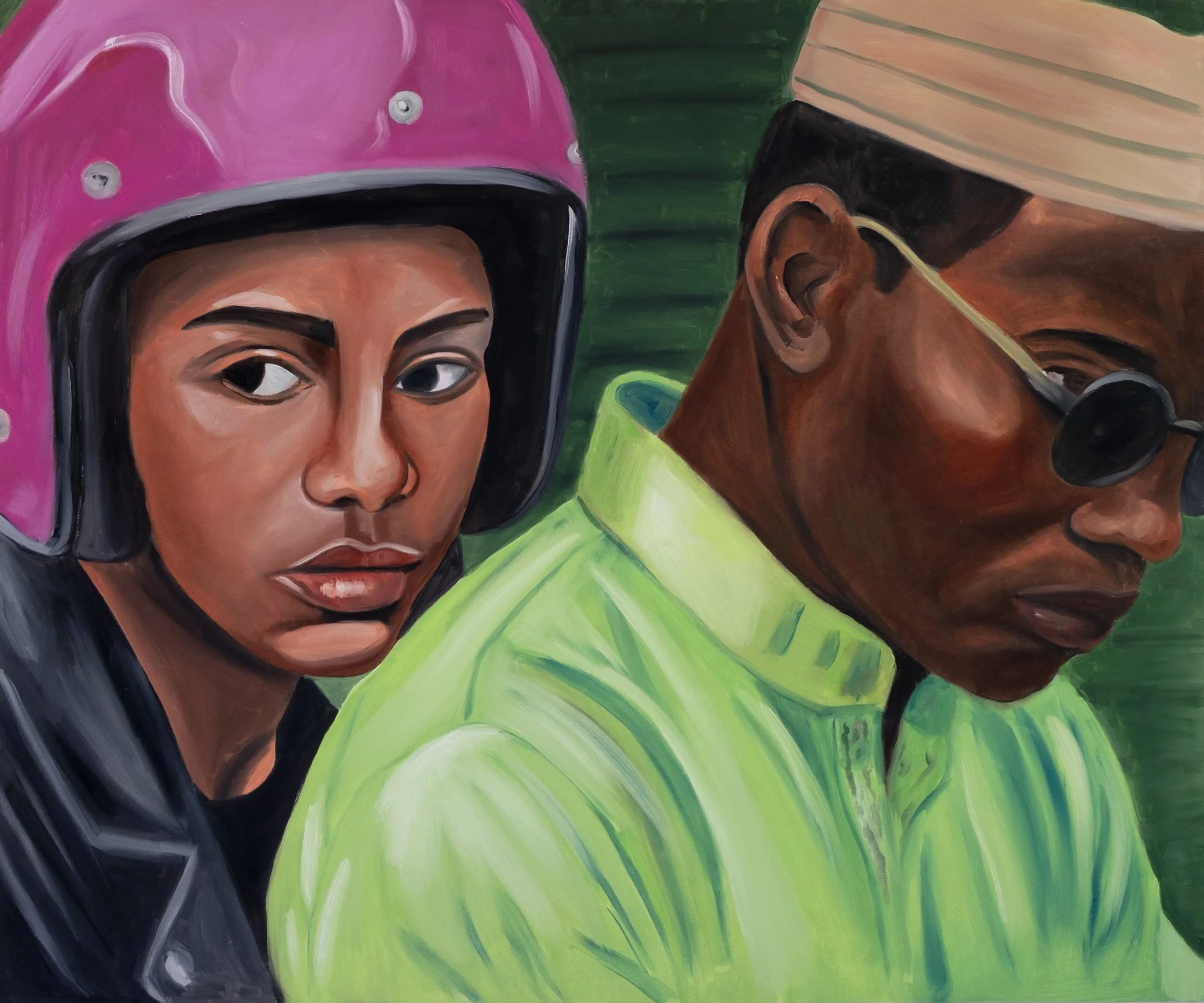
Conceived and produced in Marrakech, the exhibition unfolds as a visual and emotional archaeology, rooted in family archives and reactivated through painting, ceramics, and sculptural gestures.The title Kan Ya Ma Kan (Arabic for “Once upon a time”) opens the space of the exhibition as one of storytelling rather than documentation.

It evokes the oral traditions through which histories are passed on, transformed, and preserved across generations. For Tordjman, these words resonate deeply: long before she set foot on the African continent, her understanding of North Africa was shaped by her grandparents’ stories, photographs, objects and silences. Working from archival images and personal memories, Tordjman does not seek to reproduce the past, but to inhabit it. Her figures, interiors, vehicles, and everyday objects emerge as fragments, where intimacy meets collective history. Chairs on balconies, family ceremonies, loaded cars, fabrics, gestures: each motif becomes a vessel for transmission, carrying both what is remembered and what has been forgotten. Produced largely in situ, the works presented at Rigotang bear the imprint of Marrakech, its heat, its rhythm, its materials, its light. The city is depicted as a living presence, allowing past and present to overlap. Painting becomes a space where time stretches, folds, and suspends itself. Tordjman’s practice is deeply informed by questions of diasporic identity, intergenerational inheritance, and the poetics of everyday life.

Her work resists grand narratives in favor of quiet insistence: small gestures, repeated forms, and domestic scenes that reveal how history embeds itself in bodies, homes, and habits.